Mozilla Firefox 150 Exposed: 271 Security Vulnerabilities Uncovered
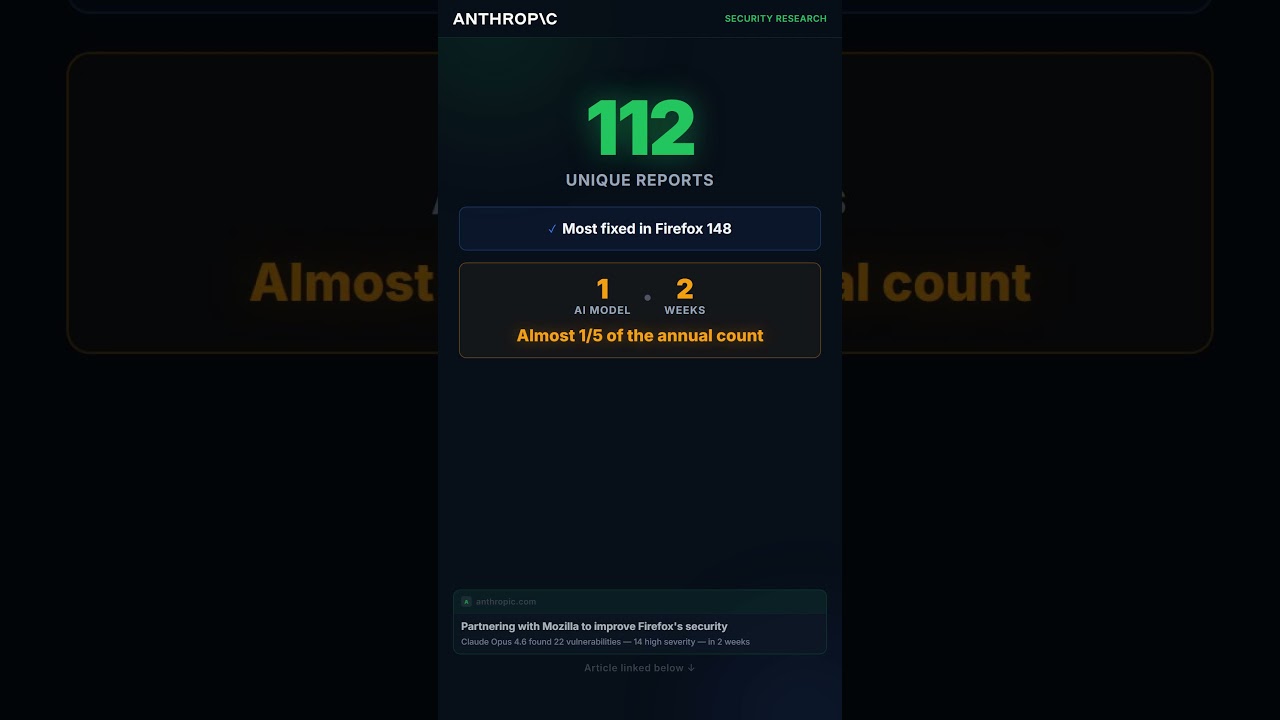
The discovery of **271 security vulnerabilities** in Mozilla Firefox 150 has significant implications for the tech industry. As [[mozilla|Mozilla]] works to pat
Summary
The discovery of **271 security vulnerabilities** in Mozilla Firefox 150 has significant implications for the tech industry. As [[mozilla|Mozilla]] works to patch these vulnerabilities, many are wondering what this means for the future of browser security. Will AI models like [[anthropic|Anthropic]]'s Mythos become the new standard for security research, or are there potential risks associated with relying on AI to identify vulnerabilities? The debate is ongoing, but one thing is clear: the use of AI in security research is here to stay. [[cybersecurity|Cybersecurity]] experts are already exploring new ways to use AI to stay one step ahead of hackers, and the discovery of these vulnerabilities is likely to accelerate this trend. As the tech community continues to evolve and adapt to new threats, it will be important to consider the potential benefits and risks of using AI in security research.
Key Takeaways
- Anthropic's AI model, Mythos, identified 271 security vulnerabilities in Mozilla Firefox 150
- The vulnerabilities identified by Mythos include zero-day vulnerabilities
- Mozilla's CTO has stated that Mythos is "every bit as capable" as the world's best security researchers
- The use of AI in security research is a complex and evolving field
- The discovery of 271 security vulnerabilities in Mozilla Firefox 150 highlights the need for careful consideration of the potential benefits and risks
Balanced Perspective
The discovery of **271 security vulnerabilities** in Mozilla Firefox 150 is a significant finding, but it's not necessarily a cause for alarm. While it's true that the use of AI in security research can be a powerful tool, it's also important to consider the potential risks. For example, if an AI model like [[anthropic|Anthropic]]'s Mythos were to fall into the wrong hands, it could be used to identify vulnerabilities for malicious purposes. Additionally, there is a risk that AI models could identify false positives, which could lead to unnecessary patches and updates. As the tech industry continues to explore the use of AI in security research, it will be important to weigh the potential benefits against the potential risks. [[security-research|Security research]] is a complex and evolving field, and it will be important to consider multiple perspectives when evaluating the use of AI in this context.
Optimistic View
The use of AI in security research is a game-changer, and the discovery of **271 security vulnerabilities** in Mozilla Firefox 150 is a testament to the power of AI. With AI models like [[anthropic|Anthropic]]'s Mythos, security researchers can identify vulnerabilities more quickly and efficiently than ever before. This could lead to a significant reduction in the number of cyber attacks, as vulnerabilities are patched before they can be exploited. Additionally, the use of AI in security research could help to identify new types of vulnerabilities that human researchers may have missed. As the tech industry continues to evolve, it's likely that AI will play an increasingly important role in keeping us safe online. For example, [[microsoft|Microsoft]] has already begun using AI to improve the security of its products, and other companies are likely to follow suit.
Critical View
The discovery of **271 security vulnerabilities** in Mozilla Firefox 150 is a disturbing finding, and it highlights the significant risks associated with the use of AI in security research. If an AI model like [[anthropic|Anthropic]]'s Mythos can identify so many vulnerabilities in a single browser version, it's likely that other AI models could be used for malicious purposes. Additionally, the fact that so many vulnerabilities were found in a single browser version raises questions about the overall security of [[firefox|Firefox]]. As the tech industry continues to rely on AI to identify vulnerabilities, there is a risk that we will become complacent and forget the importance of human security researchers. [[cybersecurity|Cybersecurity]] is a complex and evolving field, and it will be important to consider the potential risks of relying too heavily on AI. For example, [[nasa|NASA]] has already experienced a significant cyber attack, and other organizations are likely to face similar threats in the future.
Source
Originally reported by Ars Technica